

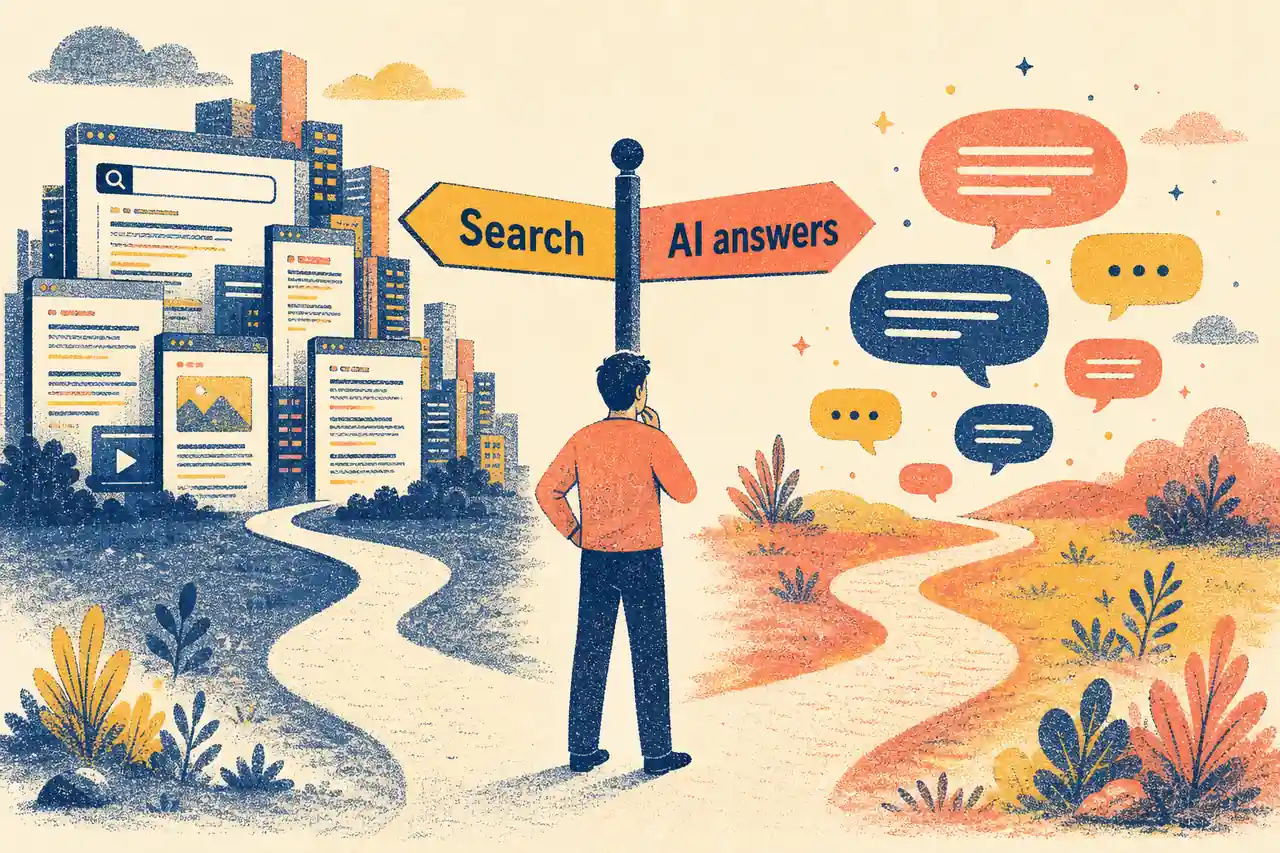
Searchable.com builds software for tracking how brands appear in AI-generated answers, but the question most owners bring to it comes earlier: does my kind of business need to care at all? The honest answer is that it depends on how your buyers look for you. This guide works through common situations and matches each one to features the company documents, without guessing at outcomes nobody has published.
When You Want a Quick Read on Where You Fit
Start with the row closest to your business. Each column draws only on Searchable’s own feature, pricing and terms pages.
| Scenario | Where AI answers touch buyers | Documented features that fit | Limit to know |
|---|---|---|---|
| B2B software | Comparison and use-case questions | Prompts for competitor comparisons and use cases, AEO Insights content gaps | Core engines are ChatGPT, Google AI Overviews and Perplexity |
| Online shop | Buyer prompts that return products | Shopping, Traffic | Only the prompts you define get tracked |
| Local service | Questions with a place in them | Prompts with local variations, grouped by location | Multi-country and region tracking is a Scale plan item |
| Agency | Client reporting | White-label reports, multi-country tracking | Publishing benchmarks of the service needs consent |
| Publisher or how-to site | Informational questions | Traffic, LLM Analytics | LLM Analytics is in beta |
| Private individual | Not applicable | None | The terms limit the service to business use |
If your row says “Not applicable”, you can stop here. Everyone else, read on for the detail behind your scenario.
When You Sell Software to Other Businesses

Software buyers may ask an assistant to compare vendors or suggest a tool for a job. Those are exactly the prompt types the Prompts feature lets you define and group.
Prompts that match a software buying cycle
- Buyer questions about a problem your product solves
- Competitor comparisons that name rival tools
- Category searches with no brand in them
- Use-case prompts tied to a role or workflow
You can group these by funnel stage and intent, then read AEO Insights for content gaps where competitors are cited and you are not. The public data hub also sorts citations into categories that include B2B review sites.
Example. An illustrative prompt group might pair “best tool for tracking customer churn” with “Tool A vs Tool B for churn analysis”. These are sample prompts, not results.
One finding worth keeping in mind: Searchable’s article on improving AI brand visibility says brands’ own sites earn about 5% of citations on unbranded prompts, which points software firms toward the review and reference sources engines already read. A separate Searchable study of 38,966 unbranded questions found ChatGPT and Gemini recommended the same brands only 42% of the time, so a software firm tracking one engine sees only part of the picture.
When You Run an Online Shop

For a shop, the question is less “are we mentioned?” and more “do our products appear when someone asks what to buy?” That is the job of the Shopping feature.
| What Shopping records | Level of detail |
|---|---|
| Product cards and shopping results | Returned for the buyer prompts you track |
| Analytics views | Product, brand, merchant and prompt level |
Traffic sits alongside it. Once Google Analytics 4 and Search Console are connected, it separates referrals from ChatGPT, Perplexity, Claude and others from organic search and from “direct”. For a shop, that split shows whether assistant visits exist at all before you invest more time in them.
Note. Google’s own guidance on succeeding in AI search asks merchants to keep Merchant Center and Business Profile information up to date. No tracking tool replaces that housekeeping.
The same guidance adds two points for merchants. Images and video should be kept current, and any structured data must match what is visible on the page.
When Customers Search for You Nearby
Plumbers, clinics and restaurants face a different pattern. The question may carry a place name, and the Prompts feature supports local variations that you can group by location.
- Write the same service question for each town or district you cover.
- Keep a branded and an unbranded version of each, since the feature can split them.
- Check whether the engines that matter locally sit in the core group or the add-ons on the pricing page.
The Prompts feature also separates tracking known prompts from researching new questions. That second mode helps when you are not sure how local customers phrase a request.
The work outside the tool matters as much. Google points to Business Profile accuracy, and Bing’s AI Performance announcement names Bing Places in its guidance.
Tip. If you serve one area, a short prompt list covering your main services may be enough to see a pattern before you add more.
When You Report on Several Brands or Markets
Agencies are named in Searchable’s own description of itself. The scenario-relevant features are white-label reports and multi-country or region tracking, both listed on the Scale plan, while the full plan breakdown belongs in a pricing review rather than here.
Brands selling in several countries fit the same pattern. Location grouping in Prompts lets you compare how each market sees you, as long as you write prompts for each one. A brand active in three markets would need three sets of questions, which uses up a prompt allowance faster than a single-market list.
Caveat. The terms say customers may not publish benchmarks or competitive analyses of the service without consent. Agencies that review tools publicly should ask first.
When Your Site Mostly Answers Questions
Publishers, how-to sites and knowledge bases live on informational queries. Searchable’s article on ranking in AI Overviews says those overviews appear mainly for informational queries, so this group has a clear reason to watch.
Two documented features fit. Traffic shows which visits arrive from AI assistants, and LLM Analytics shows AI crawler activity, bot types and crawl-to-click attribution.
Note. LLM Analytics carries a beta label on its feature page, so treat its numbers as early rather than settled.
For context, Pew Research Center found that users clicked a traditional result in 8% of visits with an AI summary against 15% without one. Google also counts traffic from its AI features inside the Web search type of the Search Console Performance report, so that data will not appear as a separate line there.
When You Are Still Unsure Searchable.com Is Worth a Look
Run through these checks in order. Each one can rule the tool in or out before you spend anything.
- Confirm you are buying as a business, since the terms exclude consumers.
- Write down five questions a buyer might ask an assistant about your category.
- Check that the engines you care about sit in the core group of ChatGPT, Google AI Overviews and Perplexity.
- Run the free AI visibility report, which covers ChatGPT, Claude and Perplexity, for a first read.
Keep the limits in view too. The terms do not warrant that the service will be error-free, and Searchable’s own blog says changes in how engines describe a brand take weeks.
Most businesses will land somewhere between “worth tracking” and “not yet”. The scenarios above will not hand you a number, because the sources used here include none by business type. What they can do is tell you which features match the way your customers ask questions, and that is a sound place to begin.

Leave a Reply